
Robert A. Mundell-A Lifelong Teacher
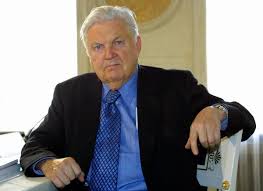
Some individuals leave a lasting impact not by following the rules but by challenging them,
exploring uncharted territory, and inspiring others with their vision and dedication. Robert A.
Mundell, a Nobel Prize-winning economist, was one such person. Known as the “father of the
Euro,” he revolutionized modern economics with groundbreaking theories, but what makes his
story even more remarkable is his unwavering passion for his work. Even in his later years, he
continued to teach, write, and inspire a new generation of thinkers, showing that age is no
barrier to innovation and intellectual pursuit.
Redefining Economics
Mundell’s journey began in Canada, where his interest in economics was sparked during his
education. He went on to earn his Ph.D. at MIT and quickly became a leading thinker in the
field. Early in his career, he challenged existing ideas about monetary and fiscal policy,
presenting bold new theories that laid the groundwork for the European Union’s single currency
and modern macroeconomic thought.
His work on the theory of optimum currency areas, which provided the intellectual framework for
the Euro, remains one of his most significant contributions. This theory explained how regions
with shared economic characteristics could benefit from a unified currency, transforming how
nations think about monetary unions.
But he didn’t stop there. Throughout his life, he continued to challenge conventional wisdom,
offering insights that shaped global financial systems. He won the Nobel Prize in Economics in
1999, but his commitment to learning and teaching didn’t end with that accolade. Instead, it
seemed to fuel his passion even further.
A Lifelong Teacher
Teaching wasn’t just a profession for him—it was a calling. For decades, he inspired students at
institutions like Columbia University, where he served as a professor, and through seminars and
lectures around the world. He had a unique ability to make complex economic theories
accessible and engaging, connecting with students from all walks of life.
Even as he grew older, his energy and enthusiasm for teaching remained constant. He believed
in the importance of passing on knowledge and encouraging critical thinking. For him, education
wasn’t about delivering answers—it was about sparking curiosity and fostering a love for
learning.
His students often described him as a mentor who cared deeply about their growth, pushing
them to think beyond traditional frameworks and explore new ideas. He showed them that
economics wasn’t just about numbers—it was about understanding people, societies, and the
choices that shape our world.
Writing as a Lifelong Passion
Writing was another avenue through which he continued to share his insights and ideas. Over
the years, he published numerous papers and articles, addressing pressing global economic
issues and offering solutions rooted in his deep understanding of macroeconomics.
His ability to stay engaged with the world’s financial challenges, even in his later years, is a
testament to his intellectual vitality. He approached every problem with the same curiosity and
determination that had defined his career from the beginning.
What’s most inspiring is that he never saw age as a limitation. Instead, he embraced it as an
opportunity to draw on a lifetime of experience and use it to contribute in meaningful ways.
Lessons in Resilience
One of the most remarkable aspects of his story is his resilience. The field of economics, like
any intellectual pursuit, is constantly evolving. New theories emerge, debates shift, and the
landscape changes. But he never shied away from these changes. Instead, he adapted,
learned, and continued to push boundaries.
This adaptability is a powerful lesson for anyone, regardless of their age or profession. It
reminds us that staying relevant and engaged requires curiosity, openness, and a willingness to
embrace new challenges.
He also showed that true passion doesn’t fade with time. Whether teaching a classroom of
eager students, writing about the intricacies of monetary policy, or mentoring young economists,
he remained deeply connected to his work until the end of his life.
A Legacy of Inspiration
His life serves as a reminder that it’s never too late to contribute, learn, or inspire. Whether
you’re in your 20s or your 80s, there’s always room to grow, share your knowledge, and make
an impact.
His ability to balance academic rigor with real-world relevance left a lasting legacy not just in
economics but in how we think about the possibilities of aging. He showed that growing older
doesn’t mean stepping away from what you love—it means finding new ways to engage with it.
Who Inspires You?
His incredible journey challenges us all to rethink what’s possible at any age. Whether it’s
continuing a career, pursuing a new passion, or mentoring the next generation, there are
endless ways to make a difference.
Think about the people in your life who embody this spirit. Perhaps it’s a teacher who continues
to inspire long after retirement, a grandparent who’s taken up a new hobby, or a friend who’s
dedicated their time to helping others. Their stories—and yours—deserve to be celebrated.
So, who inspires you? Share their story or reflect on your own journey. As Robert Mundell’s life
reminds us, passion, curiosity, and determination are timeless. Whatever your goals may be,
there’s no better time to start pursuing them than right now. Why not take that first step today?