
How to Talk About Moving to a Retirement Home
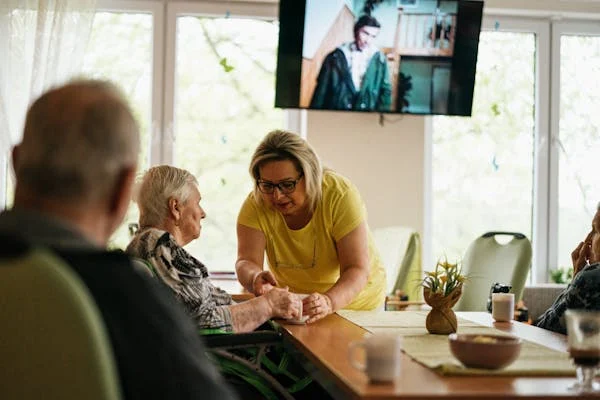
For many families, discussing the possibility of moving to a retirement home can be one of the most challenging conversations they’ll ever have. It’s a topic that often comes with a mix of emotions, resistance, and, sometimes, fear. Dawn and John Strumsky, who have been married for 45 years, know this all too well. Despite their usual agreement on most things, the Strumskys found themselves at odds when it came to their retirement future.
Dawn was eager to move into a retirement community, envisioning a life where she could enjoy her days free from the burdens of cooking, cleaning, and yard work. John, on the other hand, was staunchly against the idea. He was so resistant that during one heated discussion, he declared, “By God, I’ll sit in the burned-out, firebombed ruins of this home before anybody pulls me out!”
But as time went on, John’s perspective began to shift. In 2011, he finally agreed to move with Dawn to Charlestown, a retirement community outside Baltimore. Today, John is one of the community’s biggest advocates, even authoring a 364-page history of Charlestown that’s given to prospective residents. His change of heart is a powerful reminder that moving to a retirement community is not just a decision—it’s a journey.
Understanding the Resistance
For many seniors, the idea of moving to a retirement home is met with hesitation or outright refusal. This resistance often stems from a deep-seated fear of losing independence or the misconception that a retirement home is the same as a nursing home. According to Katherine Pearson, a specialist in elder law and a professor at Pennsylvania State University’s Dickinson Law School, the resistance is understandable. “I’ve heard more than one adult child say,
half-jokingly, ‘If Mom doesn’t check in to a retirement home, I’m going to need to.’”
The Importance of Patience
When it comes to discussing the possibility of moving to a retirement community, patience is key. “Inherently there’s a sense of denial, particularly as it relates to aging,” says Tom Neubauer, executive vice president at Erickson Living, which operates 19 retirement communities. “You’re trying to defeat that.”
Neubauer likens the process to helping a high school student choose a college: “You can’t just hand them a brochure and say, ‘This is where you’re going.’ It’s a journey.” This analogy emphasizes the importance of taking the time to explore options, consider different perspectives, and ultimately make a decision that feels right for everyone involved.
Overcoming Misconceptions
One of the biggest hurdles in these discussions is overcoming the misconception that all retirement communities are akin to sterile, hospital-like nursing homes. Today’s continuing care retirement communities (C.C.R.C.s) are far from that. While they may offer advanced care facilities for those who need them, most residences within these communities are designed to feel like ordinary apartments, with a focus on providing a vibrant and active lifestyle for their residents.
The best way to overcome these misconceptions is to allow your loved one to see a community firsthand. Lindsay Hutter, chief strategy and marketing officer at Goodwin House, a senior living and care organization in Virginia, suggests, “You can always go for a meal just to experience what it’s like.” Creating a social occasion where your loved one can dine with friends or peers who already live in a retirement community can be particularly effective. “Our observation is that peers have a much greater influence than their children do,” Hutter adds.
Action Steps for a Smooth Transition
If you’re preparing to have this conversation with a loved one, here are some actionable steps to help make the process smoother:
- Start Early: Begin the conversation before a move becomes This allows your loved one time to adjust to the idea and explore different options without feeling pressured.
- Involve Them in the Process: Encourage your loved one to participate in tours of various Websites like A Place for Mom can help you find and compare retirement communities in your area.
- Leverage Technology: Use virtual tours if in-person visits are not possible. Many retirement communities offer online tours that can give a good sense of what life there would be
- Create Positive Experiences: Arrange for your loved one to meet and talk with current This peer interaction can be more persuasive than anything you or a brochure might say.
- Be Patient: Understand that this is a big decision and it may take time for your loved one to come Offer support and reassurance throughout the process.
What are your experiences with discussing retirement community options with loved ones? How did you navigate the conversation? Join the conversation and share your insights in the Age Brilliantly forum. Together, we can support each other in making these important life transitions with compassion and care.