
Easton LaChappelle- The Teen Innovator Transforming Prosthetic Technology
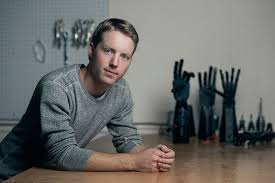
Easton LaChappelle began his journey into robotics and prosthetics at the age of 14, a time when many of his peers were just starting to explore high school activities. Instead of following a conventional path, Easton dove deep into 3D printing, software development, and engineering concepts, all with the goal of making prosthetic limbs more affordable and accessible. His early enthusiasm for innovation quickly evolved into a full-fledged mission, ultimately leading him to form a company dedicated to improving people’s lives. You can read more about his remarkable story in a Forbes Profile that highlights his game-changing work. Easton’s trajectory exemplifies the essence of an early starter: someone who identified a challenge, seized every opportunity, and used synergy and compounding growth to achieve something extraordinary well before reaching adulthood.
The Roots of a Young Inventor
Growing up in a small town, Easton was always curious about how things worked. He spent hours tinkering in his bedroom, tearing apart toys to understand their mechanics, and experimenting with makeshift robots built from everyday objects. Yet it was when he stumbled upon 3D printing technology that his imagination really took flight. He soon realized that 3D printing could open up endless possibilities—particularly in the realm of prosthetics, which had long been both expensive and limited in function.
“3D printing was like a gateway,” Easton once said. “It showed me that you don’t need a massive factory or enormous budget to create something truly impactful. A single person can design and print functional parts right at home.” That revelation laid the groundwork for his first major project: a robotic hand built using 3D-printed components and simple electronic sensors.
Building the First Robotic Hand
At 14, Easton embarked on creating his initial prototype—a rudimentary robotic hand that could open and close its fingers based on muscle signals. While it was far from perfect, the project pushed him to learn about coding, electrical circuits, and biomechanical design. He tested different materials and methods, constantly iterating to make each version more realistic and responsive.
This iterative process showcases how early starters like Easton benefit from synergy. Each small step, be it fine-tuning a finger joint or improving the software that interprets signals, built upon the lessons of the last. With every challenge he overcame, he gained skills and knowledge that would accelerate his next invention. By the time he finished his first successful prototype, he had already developed a robust foundation in engineering principles—one that most people don’t acquire until well into their college years.
An Unexpected Revelation: Making Prosthetics Affordable
A turning point came when Easton met a young girl who wore an expensive prosthetic limb that offered limited functionality. Seeing the real-world impact of expensive, outdated technology was a wake-up call. He thought, Why should advanced prosthetics be reserved only for those who can afford them? Determined to address the issue, he focused on designing a new kind of robotic arm that would cost a fraction of existing prosthetic devices.
This was more than just a neat engineering challenge; it became a moral imperative for Easton. “I wanted to show people that high-quality prosthetics could be created at a low cost,” he explained. The synergy of his initial 3D-printing experiments, combined with his coding and electrical knowledge, allowed him to refine prototypes rapidly. He also began networking with mentors—engineers, medical professionals, and business leaders—who guided him in understanding the practical needs of amputees and the complexities of the healthcare market.
Forming a Company and Gaining Recognition
As his designs improved, Easton started showcasing his work at science fairs and tech conferences, drawing attention from industry experts and the media. Over time, invitations poured in for him to speak about his breakthroughs, and he even found himself demonstrating prototypes to researchers at NASA. In each of these settings, he met potential collaborators and supporters, fueling a compounding effect: the more people who saw the potential of his affordable prosthetics, the more resources and opportunities became available.
Eventually, Easton formed his own company focused on producing cost-effective robotic limbs that leveraged 3D printing and open-source technology. According to him, the company’s mission is not just about profit, but about reshaping how we think of prosthetics. “Technology should serve people, especially those who have the greatest need,” he said in an interview. His passion for inclusive innovation garnered awards and grants, further expanding his platform to advocate for widespread change in medical technology.
Balancing Youthful Curiosity with Real-World Goals
Amid the excitement, Easton was still a teenager navigating typical adolescent challenges—homework, friendships, and defining his future goals. Yet, his early start allowed him to integrate his personal life with his professional aspirations. Being young often led to skepticism from some adults, but he met these doubts with perseverance and a track record of tangible results.
He emphasized the importance of failing forward, too. Prototypes broke or malfunctioned, and not every new feature worked as planned. But each setback was a lesson, pushing him to adapt and refine his designs. This resilient attitude—combined with a willingness to learn from mentors—proved key to sustaining the momentum he built from such a young age.
Lessons from an Early Starter
Easton LaChappelle’s story offers a blueprint for how synergy and compounding opportunities can snowball when you start early:
1.Identify a Problem that Matters: Passion grows when you see the direct impact of your work. Easton realized the urgent need for affordable prosthetics and channeled his energy there.
2. Embrace Iteration: Start small, fail fast, and improve constantly. Every version of his robotic hand brought him closer to a market-ready product.
3. Seek Mentors and Allies: Collaboration turns individual sparks into collective achievements. Easton’s willingness to learn from medical experts and engineers accelerated his growth.
4. Stay Grounded in Purpose: A big part of Easton’s success comes from his commitment to making technology more accessible. Purpose-driven work resonates with others and attracts support.
Who Inspires You?
Easton LaChappelle’s journey underscores how starting at 14 with a simple 3D-printed hand can evolve into forming a company that transforms people’s lives. His determination, coupled with strategic synergy and relentless iteration, shows that meaningful change doesn’t have to wait for adulthood.
Now, think about the people around you. Do you know someone—a neighbor, a classmate, a family member—who’s been quietly tinkering with big ideas before hitting their late teens? Share their stories or reflect on your own. Because as Easton’s story proves, an early start isn’t just about having extra time; it’s about seizing the moment, learning from every challenge, and staying committed to making the world a better place.