
Malala Yousafzai The Early Starter Who Became a Global Voice for Girls’ Education
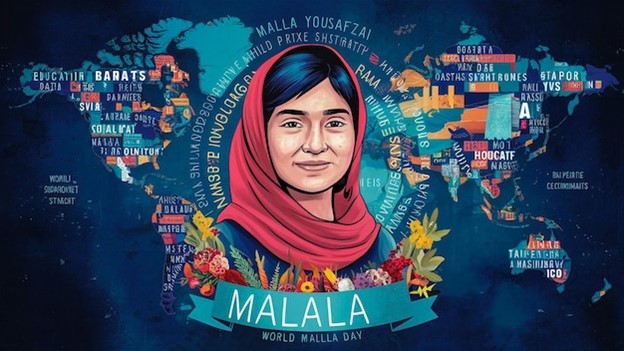
Malala Yousafzai’s story is nothing short of extraordinary. She was only 11 years old when she began advocating for girls’ education in her hometown of Mingora, Pakistan. At an age when most children are simply focused on schoolwork and play, Malala was already speaking out for the rights of girls to receive an education—something that was being threatened by the Taliban in her region. Her bravery, resilience, and determination have not only inspired millions but have also made her the youngest Nobel Peace Prize laureate in history.
Who is Malala Yousafzai?
Malala was born in 1997 in the Swat Valley of Pakistan, a region known for its stunning natural beauty but also plagued by political turmoil. Her father, Ziauddin Yousafzai, was an educator and an outspoken advocate for education, particularly for girls. From a young age, Malala was exposed to the importance of education and the challenges faced by girls who wanted to learn in a region where the Taliban imposed strict rules that barred girls from attending school.
When the Taliban took control of Swat Valley, they began closing girls’ schools and threatening those who dared to defy their orders. But Malala was not one to stay silent. At just 11 years old, she began writing a blog under a pseudonym for the BBC, detailing the challenges she faced in trying to attend school. Her words were raw, honest, and powerful, shedding light on the harsh realities of life under the Taliban’s rule. Her activism soon gained international attention, and by the time she was 14, she was openly speaking out on television and at public events.
How Did Malala Start Planning Her Future?
Unlike many of us who stumble into our passions later in life, Malala discovered her purpose early on. She knew from a young age that she wanted to stand up for girls’ rights, even if it meant putting herself at great risk. In one of her most famous quotes, she said, “One child, one teacher, one book, one pen can change the world.” Malala’s words were not just empty rhetoric; they were a rallying cry for action.
Malala’s journey wasn’t easy. In 2012, when she was only 15 years old, a Taliban gunman boarded her school bus and shot her in the head in retaliation for her activism. Most people would have been paralyzed with fear after such a traumatic experience, but not Malala. She not only survived the attack but also came out of it even more determined to fight for what she believed in. “I don’t want revenge on the Taliban,” she once said in an interview with BBC. “I want education for the sons and daughters of the Taliban.”
Turning Tragedy into a Global Movement
After her recovery, Malala and her family moved to the United Kingdom for her safety. But instead of retreating into a quiet life, she used her newfound platform to continue her advocacy on an even larger scale. At just 17 years old, Malala became the youngest person to receive the Nobel Peace Prize in 2014 for her relentless efforts in promoting girls’ education. But for Malala, it wasn’t just about receiving accolades; it was about making real change.
In 2013, she co-authored her memoir, I Am Malala, which became an international bestseller and helped amplify her message. The book offered a deeper look into her life, her dreams, and her vision for a world where every child, regardless of gender, has the right to education. “When the whole world is silent, even one voice becomes powerful,” she wrote in her book, emphasizing that speaking out, even when it’s difficult, can make a difference.
In 2017, Malala took her mission a step further by launching the Malala Fund, a nonprofit organization dedicated to advocating for girls’ education globally. Through the Malala Fund, she is working to ensure that girls in underprivileged and conflict-affected areas have access to 12 years of free, quality education. Today, the organization is active in countries like Afghanistan, Nigeria, and India, making a tangible impact on thousands of lives.
Balancing Advocacy with Education
What’s truly inspiring about Malala’s journey is that even as she became a global icon, she remained committed to her own education. In 2020, she graduated from Oxford University with a degree in Philosophy, Politics, and Economics. For Malala, her education was never just about gaining knowledge—it was about using that knowledge to bring about change. “Education is education. We should learn everything and then choose which path to follow,” she said. “Education is neither Eastern nor Western, it is human.”
Malala’s journey teaches us an important lesson about the power of starting early and staying true to your mission. By recognizing her purpose at such a young age, she was able to leverage every opportunity to make a lasting impact. Her story shows us that even one person, no matter how young, can change the world if they have the courage to stand up for what they believe in.
What Can We Learn from Malala?
Malala’s story is proof that you don’t need to wait until you’re an adult to start planning your future. Whether you’re passionate about social justice, art, business, or science, starting early can help you take advantage of synergies and compounding opportunities over time. Malala’s journey was filled with obstacles, but she never let fear stop her. Instead, she used every challenge as fuel to push forward.
So, what can you do today to start planning for your future? Whether it’s a small step like joining a local community group, starting a blog, or just reading up on a topic you’re passionate about, every effort counts. The earlier you start, the more you can achieve.
Do you know someone who, like Malala, started early to make a difference? Perhaps a young person in your life who is already making waves in their own unique way? We’d love to hear their stories! Share them with us in the comments below and let’s celebrate the young trailblazers who inspire us all.