
Becca Levy: How Your Beliefs About Aging Shape Your Life
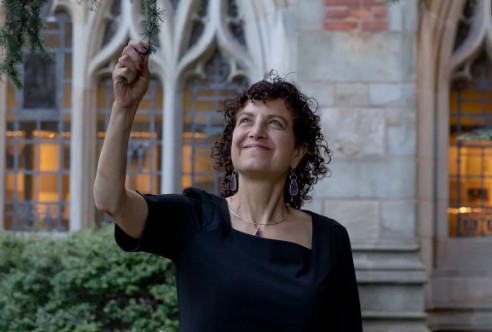
Most of us absorb beliefs about aging long before we ever question them. We hear jokes about becoming forgetful, see older people portrayed as less capable, and learn to treat youth as something worth preserving at almost any cost. Over time, those messages can become so familiar that they begin to feel like facts rather than assumptions. Becca Levy has spent decades studying what happens when those assumptions take hold.
As a psychologist and researcher, Levy has explored how our beliefs about aging can influence the way we actually age. Her work suggests that negative age stereotypes do more than shape how people feel about getting older. They can affect behavior, confidence, physical health, cognitive performance, and the willingness to stay engaged with life.
That matters because beliefs often guide choices before we even realize it. Someone who assumes that learning becomes harder with age may avoid taking a class. Someone who believes physical decline is inevitable may become less active. Someone who thinks reinvention belongs to younger people may turn away from a new career, creative pursuit, or relationship before giving it a real chance. None of these decisions feels dramatic in the moment, but together they can shape the direction of a life.
Levy’s research offers a more hopeful possibility. When people view aging as a stage that can still include growth, contribution, connection, and discovery, they are more likely to behave in ways that support those outcomes. They may remain physically active, maintain stronger relationships, pursue new interests, and continue challenging themselves intellectually.
This does not mean that mindset can erase every difficulty that comes with age. Health, genetics, finances, and life circumstances all play important roles. What mindset can do is influence whether we approach those realities with resignation or with a sense that there are still meaningful choices available to us. That distinction can be powerful.
A person who sees age as a closing door may begin shrinking their world without noticing. A person who sees age as another stage of development may continue looking for ways to expand it. Both may face similar limitations, but their expectations can lead them toward very different experiences.
The stories we tell ourselves become especially important during major transitions. Retirement, an empty nest, a health setback, or the end of a long career can all create uncertainty. In those moments, it is easy to assume that the most important chapters are already behind us. Levy’s work challenges that assumption by showing how much our outlook can affect what we do next.
Growing older can bring losses, but it can also bring perspective, resilience, emotional clarity, and a stronger understanding of what deserves our time. Those qualities are not consolation prizes. They can become the foundation for a life that feels more intentional than the one we lived when we were younger.
The challenge is recognizing how many of our limits are inherited rather than real. We may have spent years hearing that older people should slow down, step aside, or stop taking risks, but those expectations do not have to become instructions.
Becca Levy’s work reminds us that aging is not only something that happens to the body. It is also shaped by the meanings we attach to it. When those meanings are rooted in fear and decline, they can quietly narrow our choices. When they are rooted in possibility, they can encourage us to keep participating fully in our own lives.
What belief about aging have you accepted without questioning, and how might your life change if you stopped letting it decide what is possible?
Start the conversation by sharing your thoughts in the comments.
If you know someone who is continuing to grow, contribute, reinvent themselves, or inspire others as they age, reach out to AgeBrilliantly and tell us their story. They may be one of our next Pathfinders.